What is Python Programming?
Python is a programming language. Guido van Rossum (pronounced GWEE-doh vahn ROSS-um) created it, and it was first released in 1991.
And no, it’s not named after the snake. The story behind the name is actually quite fun, and Guido tells it himself:
Why learn Python?
Python is one of the most beginner-friendly programming languages out there. In 2026, a lot of non-coders are picking it up too, because it sits behind many of the AI tools we use every day, like Claude, ChatGPT and Gemini.
You don’t need a tech background to get started. That’s a big part of why I’m learning it myself.
Features of Python
1. Open-source
Python is free. You don’t have to buy a license or pay to use it. You can download it from python.org.
2. High-level language
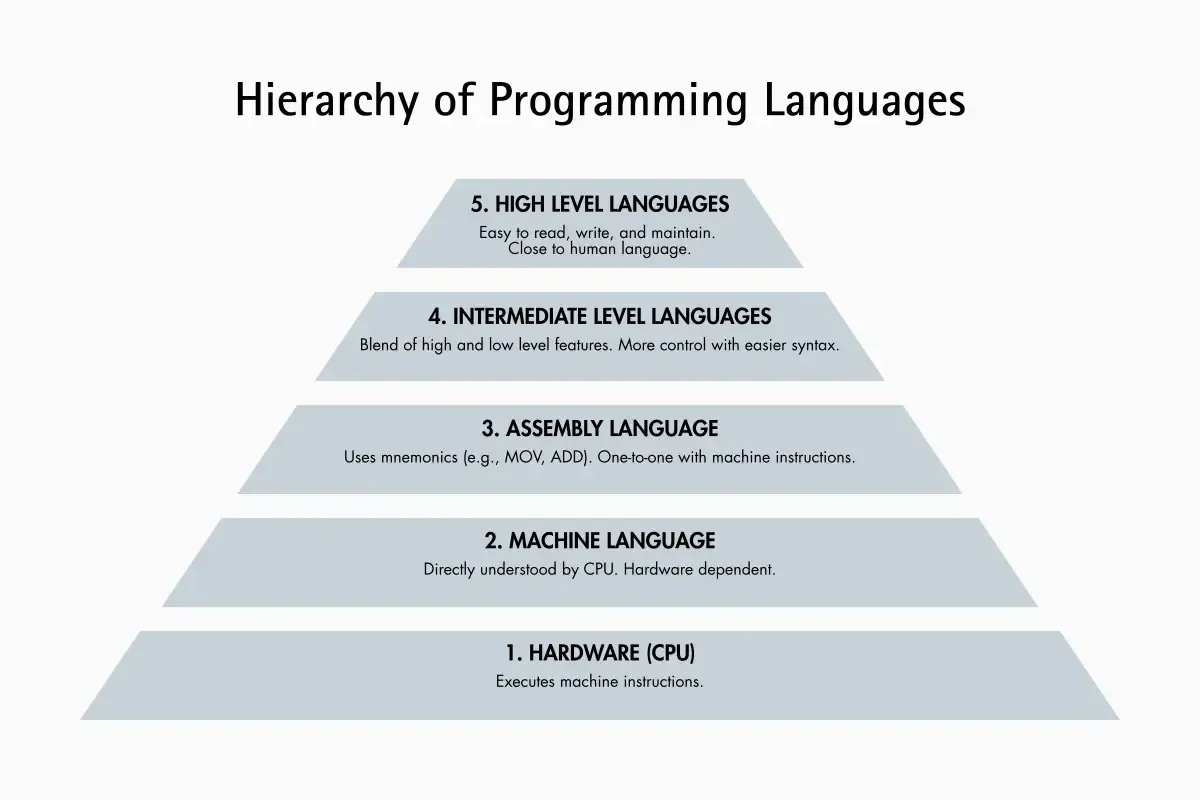
Programming languages sit on a scale of “translation levels.”
- The closer a language is to human language, the higher-level it is.
- The closer it is to machine language (the 0s and 1s a computer actually understands), the lower-level it is.
Python is high-level. You write something readable like print("Hello"), and Python takes care of translating it into something the machine understands.
3. Interpreted language
Python code runs line by line. An interpreter reads each line and executes it right away, with no separate “compile everything first” step.
For beginners, this is a big win. You can write a line, run it, see the result, and fix mistakes as you go. If something breaks, Python tells you exactly which line to look at.
4. General-purpose
Some languages are built for one job. HTML structures web pages, CSS styles them, and SQL talks to databases. Python isn’t limited like that. You can use it to:
- Automate repetitive tasks
- Build websites
- Analyse data
- Work on AI and machine learning
- Create desktop applications
That’s why it’s called a general-purpose language: one language, many uses.
5. Dynamically typed
In Python, you don’t have to declare what type of data a variable will hold. The type can change while the program is running.
python
x = 10        # x is a number
x = "hello"   # now x is text
Python is fine with that. In languages like Java or C++, this would throw an error. We look at types in more detail in Data Types in Python.
Wrapping up
Python is free, readable, forgiving for beginners, and flexible enough to be useful whether you want to automate a boring task or dive into AI. That mix is hard to beat.
If you want to keep going, start with Data Types in Python, the first post in my Python Basics series. To practise, try the exercises in the Python Practice Exercise series, starting with Python Coding Exercise #01.
Thanks for stopping by. ✦